Boats
Center cockpit sailboats offer a unique design and layout compared to the more common aft cockpit counterparts. These sailboats have the helm and cockpit located closer to the middle of the vessel, providing a range of benefits in terms of comfort, privacy, and functionality. Center cockpit sailboats can be found in a variety of sizes and models, from coastal cruisers to long-distance blue water yachts.
One of the main advantages of center cockpit sailboats is that they often provide more interior space, including a larger aft cabin, which can be useful for extended cruises or living aboard. Additionally, their elevated helm position offers better visibility and can help keep the crew drier in rougher seas. However, it's essential to consider the preferences of the sailor and the intended use of the vessel when evaluating the suitability of a center cockpit sailboat.
Key Takeaways
- Center cockpit sailboats provide unique comfort and spaciousness advantages compared to aft cockpit designs.
- Elevated helm positions and larger aft cabins are common features of these sailboats.
- These boats come in various sizes and models, suitable for coastal cruising, and long-distance sailing.
Basic Structure of Center Cockpit Sailboats
Design and Draft
Center Cockpit sailboats feature a cockpit located closer to the center of the boat, providing greater balance and stability. The design allows for improved visibility, easier access to the boat's systems, and increased interior space. One of the key factors in designing these sailboats is their draft. The draft refers to the depth of the boat from the waterline to the lowest point of the keel. Sailboats with a shallow draft can navigate shallow waters, while those with a deep draft offer increased stability and better upwind performance.
Hull Types
Center Cockpit sailboats can be built using various hull types, each offering distinct advantages and disadvantages. The main hull types include:
-
Monohull: The most common type of sailboat, with a single hull providing a traditional sailing experience. Monohulls are known for their maneuverability, speed, and responsiveness.
-
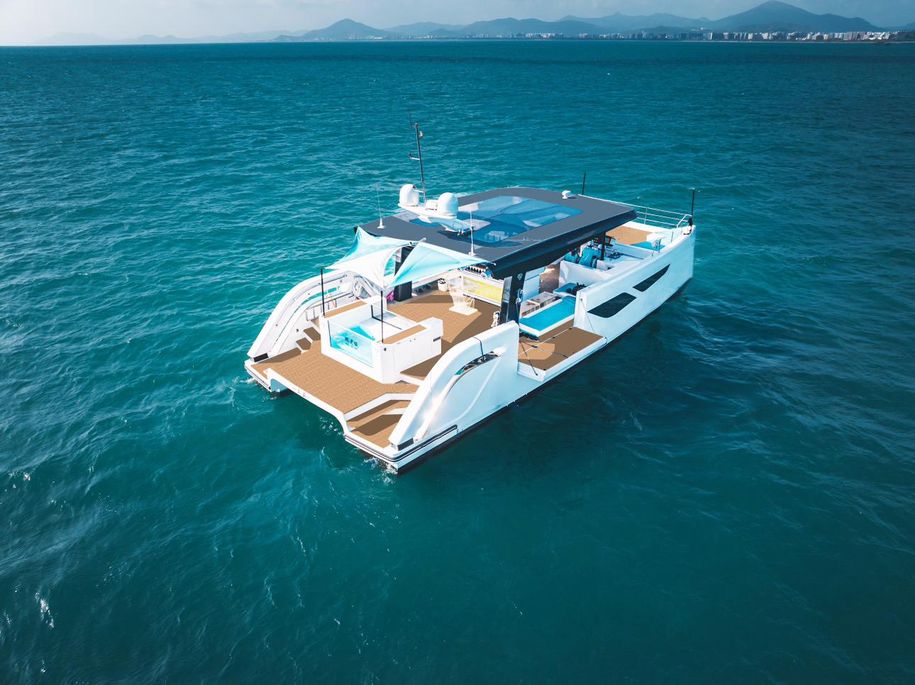
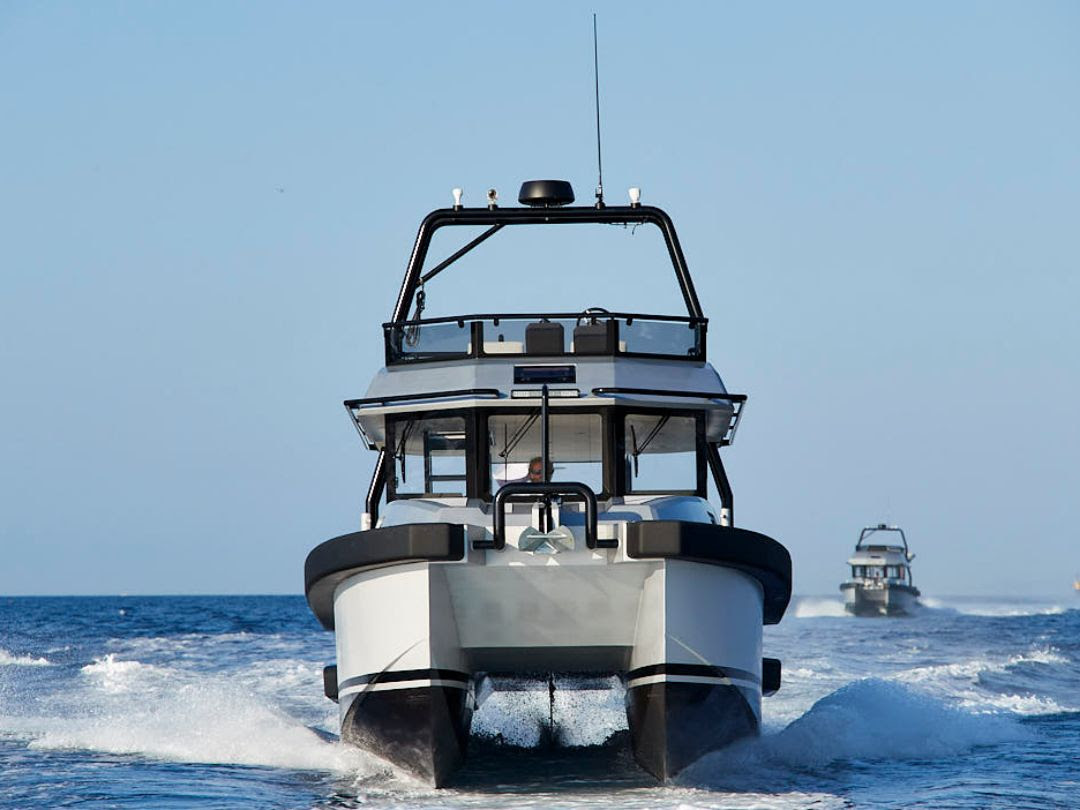
Catamaran: A sailboat with two parallel hulls of equal size. Catamarans provide additional stability, increased deck space, and limited heeling during sailing, making them highly popular for leisure and family cruising.
-
Trimaran: A sailboat with three separate hulls – a main hull in the center and two smaller hulls on either side. Trimarans offer the best of both monohulls and catamarans, combining speed, stability, and spacious interiors.
LOA and Wide Beam
LOA (Length Overall) is an important characteristic of Center Cockpit sailboats, as it refers to the boat's total length from the bow to the stern, including any extensions or overhangs. Generally, a longer LOA provides increased stability, speed, and interior space, making it suitable for long-distance cruising and ocean crossings.
Wide beam sailboats have increased width, providing greater interior space and stability. A wider beam allows for improved accommodations, storage, and overall comfort for those aboard. However, it's important to note that an excessively wide beam may negatively affect sailing performance and upwind ability.
Advantages of Center Cockpit Sailboats
Visibility
One of the primary advantages of center cockpit sailboats is the improved visibility they offer. The elevated position of the center cockpit provides a better line of sight when navigating, allowing the crew to see obstacles, other boats, and navigation markers more easily. This can make it safer and more enjoyable to sail, especially in crowded waterways or when visibility is limited.
Ventilation
Center cockpit sailboats tend to have better ventilation compared to aft cockpit sailboats. The midship location of the cockpit is more exposed to the wind and allows for better air circulation throughout the boat. This increased airflow can help keep the living quarters cool and comfortable, especially during hot, sunny days.
Motion
The motion of a center cockpit sailboat is generally more comfortable than that of an aft cockpit boat. Since the cockpit is closer to the center of the boat, it experiences less pitching and rolling motion when underway. This can reduce the likelihood of seasickness for passengers and crew and make long passages more enjoyable.
Privacy and V-Berth
Center cockpit sailboats offer excellent privacy for the occupants of the V-berth, which is typically located at the bow of the boat. Due to the separate living spaces provided by the center cockpit design, there is a clear separation between the V-berth and the main living quarters, often leading to the V-berth being affectionately referred to as the "owner's cabin." This separation provides a quiet retreat for rest and relaxation, away from the noise and activity of the cockpit and main saloon. Additionally, the V-berth in center cockpit sailboats tends to be larger and more comfortable than in aft cockpit designs, making it an ideal space for sleeping or lounging.
Functionality and Uses
Center cockpit sailing vessels are popular for a variety of sailing activities, thanks to their unique design and functionality. These boats are characterized by their central location of the main controls and steering, instead of the more traditional aft or rear-end cockpit design. The center cockpit configuration offers a number of advantages, such as enhanced visibility and better weight distribution, making it suitable for both day sailing and overnight cruising.
Day Sailing
Day sailing activities typically involve short trips and excursions, usually lasting a few hours or a single day. Center cockpit sailboats provide an excellent platform for this type of leisure sailing. The centralized positioning of the helm and sailing controls allows for easier maneuvering, making it possible to navigate through tighter spaces and demanding conditions. The cockpit, being amidships, tends to be more stable and less prone to the pitching motion experienced on aft cockpit boats. This ensures a more comfortable and enjoyable sailing experience for the crew.
Overnight Cruising
When it comes to overnight cruising, center cockpit sailing vessels truly shine. The central location of the cockpit is advantageous, as it separates and simultaneously extends the living quarters both forward and aft. This allows for a larger, more private master cabin usually located in the back of the boat, with separate access from the saloon. In addition, the increased distance from the main cabin to the forward guest cabin ensures privacy for both the owners and the guests.
Center cockpit sailboats also offer excellent protection from the elements, making them ideal for extended cruises and potentially harsh weather conditions. The presence of a hard dodger overhead, as well as full cockpit enclosures, can provide further insulation and comfort during long passages.
Overall, center cockpit sailing vessels offer flexibility and functionality for both day sailing and overnight cruising situations. Boaters who prefer enhanced visibility, a more comfortable ride, and versatile accommodations will find these boats to be an excellent choice for their sailing adventures.
Notable Center Cockpit Sailboats Models
Morgan
Morgan Yachts, founded by Charles Morgan, is known for its sturdy and comfortable center cockpit sailboats. The Morgan 41 Out Island is a prominent model that has been popular among cruisers since the 1970s. The large cockpit area provides ample space for relaxation and sails handling, while the interior layout ensures comfortable accommodations for long journeys.
Beneteau
Beneteau, a French company known for producing high-quality and innovative sailboats, offers a variety of center cockpit models. The Beneteau Oceanis 50 is one among them, featuring an ergonomically designed cockpit, spacious deck, and a luxurious interior. With powerful sail handling systems, the Oceanis 50 offers both performance and comfort.
Hylas 44
The Hylas 44 is a high-quality center cockpit sailboat designed by German Frers, a renowned naval architect. Known for its sleek lines, excellent performance, and comfortable accommodations, the Hylas 44 is ideal for long-distance bluewater cruising. The spacious cockpit design allows for easy sail handling, while the well-appointed interior features generous living spaces and a practical galley.
Moody
Moody Yachts, a British brand with a rich history, is another prominent name in the center cockpit sector. The Moody 54DS is a notable model, featuring a luxurious center cockpit with easy access to the helm and a bright, spacious interior. With its powerful rigging, comfortable accommodations, and modern conveniences, the Moody 54DS is well-suited for extended cruising and living aboard.
Oyster
Oyster Yachts, a British boatbuilder, is renowned for its luxury and high-quality center cockpit sailboats. The Oyster 56 is a prime example of the brand's attention to detail and commitment to performance. This world-class bluewater cruiser boasts a comfortable, spacious cockpit and a well-thought-out interior layout. The Oyster 56 offers an excellent combination of elegance, comfort, and seaworthiness for serious cruisers.
Sail Area and Sailing Systems
Monohull
A monohull sailboat has a single hull, allowing it to cut through the water with minimal resistance. The sail area on a monohull is determined by its rig type, such as sloop, ketch, or cutter, and is crucial for providing adequate power to move the vessel. The sailing system in a monohull typically involves a center cockpit which provides a centralized location for controlling the sails, optimizing the boat's performance.
Catamaran
Catamarans are multi-hulled sailboats, usually featuring two parallel hulls. This design offers increased stability and living space compared to monohull designs. Catamaran sail areas are generally larger than monohulls due to their increased beam, which allows for larger sails. The sailing system on a catamaran often utilizes a central cockpit as well, providing a vantage point for optimal control of the vessel's sails.
Sloop
A sloop is a popular rig type for both monohulls and catamarans. It is characterized by a single mast and two sails - a mainsail and a headsail. The mainsail is typically larger than the headsail and is responsible for most of the sail area on a sloop. The sailing systems on a sloop are designed for simplicity: one person can usually handle the sail controls, making it perfect for single-handed or small crew sailing.
Ketch
The ketch rig is another common configuration for monohull sailboats. It features two masts, with the mainmast positioned towards the center cockpit and the smaller mizzenmast placed farther aft. The ketch rig provides additional sail area options compared to a sloop, allowing for better control of sail power in various wind conditions. The sailing system for a ketch is more complex than that of a sloop, requiring knowledge of both masts' sail setups to get optimal performance.
Engine and Propulsion Systems
Inboard
Inboard engines are usually housed within the hull of a center cockpit sailboat, providing a smooth and stable ride. These engines are quieter than their outboard counterparts and offer improved weight distribution throughout the vessel. Inboard engines can run on either diesel or gasoline depending on the specific model.
Inboard propulsion systems often utilize a straight propeller shaft that extends from the engine through the hull to the propeller, which is mounted under the boat. Some advanced inboard systems incorporate V-drive or Z-drive configurations, which provide improved maneuverability.
Outboard
Outboard engines, on the other hand, are external to the hull and mounted on a bracket or transom. Outboard engines are more accessible for maintenance and repairs and can be easily replaced if necessary. These engines can also run on gasoline or occasionally onView electric motors for propulsion.
Outboard propulsion systems consist of a motor unit with an integrated propeller that can be tilted up or down to adjust the draft or angle when sailing. Outboards can be steered directly by turning the engine or connected to the boat's rudder for more precise navigation.
Diesel
Diesel engines are often favored in center cockpit sailboats due, in part, to their fuel efficiency, reliability, and longevity. Diesel engines produce more torque than gasoline engines and are capable of generating the necessary power for larger sailboats. Additionally, diesel fuel is less flammable than gasoline, which can be a crucial safety consideration for boaters.
Maintenance for diesel engines is essential and involves routine oil changes, fuel filter replacements, and inspection of the exhaust system. Diesel engines can be found in both inboard and outboard configurations.
Gas
Gasoline engines are common in smaller sailboats and offer some advantages, such as lower initial cost, quieter operation, and lighter weight in comparison to diesel engines. Gas engines are generally easier to start, especially in colder climates.
However, gasoline engines are less fuel-efficient than diesel engines and require more frequent maintenance and tune-ups. Like diesel engines, gasoline engines can be incorporated into both inboard and outboard propulsion systems. The choice between diesel and gas engines ultimately depends on the specific needs, preferences, and budget of the boat owner.
Boat Dealerships and Reviews
When looking for a center cockpit sailboat, it is essential to research various boat dealerships and reviews. Dealerships specializing in sailboats can provide appropriate guidance and expertise, helping customers make informed decisions.
One reputable platform for searching and finding boat dealerships is YachtWorld. This platform offers a wide range of center cockpit sailboats for sale from various dealerships around the world. Users can filter their search by location, price, size, and numerous other criteria, making the process of finding the perfect sailboat much easier.
It is also crucial to consider customer reviews when evaluating dealerships and sailboats. Reviews provide insights into the experiences of other boat owners, giving potential buyers valuable information about the quality, performance, and reliability of center cockpit sailboats. Websites like BoatTEST offer comprehensive reviews of boats, including center cockpit sailboats, by experienced marine professionals.
During your search, pay attention to the following key aspects:
- Quality: Ensure the sailboat is well-built and made from durable materials, as this will affect its performance and longevity.
- Layout: Review the sailboat's layout to determine if it fits your specific needs, such as sleeping accommodations, storage, and sailing equipment.
- Performance: Consider how the sailboat performs under various conditions and whether it meets your sailing expectations.
- Ease of Maintenance: Investing in a sailboat with simple maintenance requirements can save you significant time and money in the long run.
In conclusion, researching boat dealerships and reviews is an important part of finding the right center cockpit sailboat. Platforms like YachtWorld and BoatTEST can provide helpful information to make a knowledgeable decision.
Frequently Asked Questions
What are the pros and cons of center cockpit sailboats?
Center cockpit sailboats offer a few key advantages, including better visibility, increased privacy, and potentially more secure movement around the boat. However, these designs can also result in a higher center of gravity and may give the boat a "top-heavy" appearance. Balancing these pros and cons will depend on personal preferences and priorities.
Which manufacturers produce center cockpit sailboats?
Many reputable manufacturers produce center cockpit sailboats, including Hallberg-Rassy, Amel, Hylas, Moody, and Oyster. Each of these manufacturers offers various models and sizes to suit different sailing needs and budgets.
What are the best models of center cockpit sailboats under 50 feet?
There are several excellent models of center cockpit sailboats under 50 feet, such as the Hallberg-Rassy 44, the Moody 45DS, and the Hylas 48. These boats offer a balance of comfort, performance, and seaworthiness, making them suitable for a variety of sailing scenarios.
How does a full keel design affect center cockpit sailboats?
A full keel design on a center cockpit sailboat provides increased stability and better tracking in heavy seas. This design also typically results in a more comfortable ride. However, full keel sailboats typically have a slower overall speed and less maneuverability compared to fin keel designs.
What are the key features of small center cockpit sailboats?
Small center cockpit sailboats usually have a raised cockpit area to allow for better visibility, an aft cabin separate from the main living area for increased privacy, and easier access to both the bow and the stern areas. Additionally, they tend to have well-protected cockpits and more concentrated weight distribution, which can contribute to their safety at sea.
Where can center cockpit sailboats be found for sale in the US?
Center cockpit sailboats can be found for sale in the US through various channels, such as yacht brokers, online classifieds, and manufacturer websites. Boat shows, marinas, and sailing clubs are also potential sources for finding pre-owned center cockpit sailboats. Always be sure to research the boat's history and condition before making a purchase.
Specifications
Boats for Sale
 Pontoon OR Tritoon
Listing Coming Soon
 Aluminum Fishing Boats
Listing Coming Soon
 Aluminum Fishing Boats
Listing Coming Soon
 Jet
Jet